Buying a Glute Ham Developer is not simply a matter of choosing the strongest-looking frame. Global buyers must connect equipment design with athlete safety, facility capacity, local standards, and long-term maintenance. A machine may appear impressive in photographs, yet fail when its pads shift, its welds flex, or its adjustment pins wear quickly.
The market context matters. The 2024 EuropeActive and Deloitte European Health & Fitness Market Report recorded 67.6 million club members and €31.8 billion in industry revenue across Europe in 2023. This growth increases demand for durable strength equipment, but it also raises buyer expectations. Meanwhile, ACSM’s Worldwide Survey of Fitness Trends consistently identifies strength training, functional exercise, and technology-supported programming as important industry directions. These reports do not select a Glute Ham Developer for you. They show why specifications deserve closer inspection.
This guide presents seven practical buying tips for international purchasers. It examines frame stability, pad geometry, adjustment range, user comfort, material quality, certifications, shipping, and after-sales support. Check the details.
A coach should test knee support, hip alignment, and footplate grip with real movement, not only a product brochure. A facility manager should measure doorways, flooring, and storage space before ordering. Manufacturers should provide load ratings, steel specifications, warranty terms, and replacement-part availability. Those documents reveal more than polished marketing language.
No checklist is flawless. Prices can hide weak service, while premium branding cannot guarantee better biomechanics. Buyers should compare evidence, request factory photographs, and ask how quality control is documented. That cautious process supports safer decisions and more reliable global purchasing.
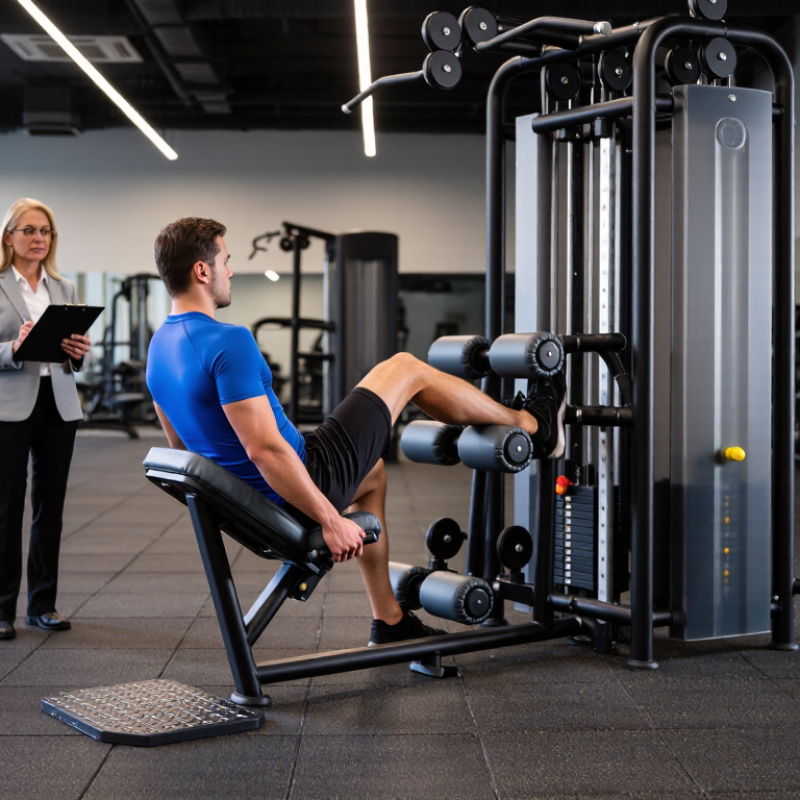
A glute ham developer should match your training goals before it matches your budget. Decide whether the unit will support hamstring strength, trunk conditioning, athletic testing, or general member use. The ACSM’s 2024 Worldwide Survey ranked traditional strength training among the leading global fitness trends. That signals steady demand, but it does not justify buying the largest frame. I have seen facilities lose useful floor space through poor equipment planning.
Tip: Measure the full movement area, not only the machine footprint. Include entry space, head clearance, and safe clearance behind the rollers. A compact studio may need a shorter frame, while a performance facility may require heavier construction and faster adjustment. Check user height ranges, pad angles, ankle-lock positions, and adjustment markings. Small details matter during busy sessions.
The HFA 2024 Global Report recorded more than 184 million health club members worldwide, showing how varied facility users can be. One setting may serve beginners, athletes, and older adults in the same hour. Choose durable upholstery, stable feet, replaceable hardware, and corrosion-resistant finishes for humid markets. Ask suppliers for load testing, maintenance schedules, and applicable safety documentation. Specifications can look impressive. Real operation is messier. Test several body sizes before ordering, and record setup times during a crowded session. WHO guidance also recommends muscle-strengthening activity on at least two days weekly, supporting a clear use case for accessible resistance equipment.
7 Glute Ham Developer Buying Tips for Global Buyers
Evaluate size, adjustability, and user positioning before comparing finishes or accessories. In equipment evaluations, I measure the full footprint, not just the advertised frame length. A compact unit may fit a home gym, but its rear clearance can restrict movement. Leave space for mounting, stepping, and safe dismounting. Check door widths and local delivery limits. These details often create unexpected costs.
Tip 1: Test the adjustment range. The hip pad, foot plate, and ankle rollers should suit different body heights. Look for secure locking points, clear markings, and smooth changes between settings. A tall user may need deeper hip support, while a shorter user may lose alignment on a fixed platform. Poor positioning reduces comfort and can change exercise mechanics. It is easy to overlook this.
Tip 2: Study user contact points closely. Padding should support the hips without pressing sharply into the pelvis. Foot rollers need enough diameter for stable ankle placement. Ask for measured pad widths and adjustment distances, rather than relying on vague terms like “universal fit.” Request assembly drawings and load-test information when available. I would also check the return process, because fit cannot be judged perfectly from photographs. Some specifications remain incomplete. That deserves caution.
| No. | Buying Dimension | 1 | Overall Size and Available Space |
Typical footprint: approximately 1.5–2.2 m² Measure the equipment footprint together with the user-access area. Leave additional clearance around the unit for mounting, dismounting, and exercise movement. |
A glute ham developer requires more usable space than its steel frame alone suggests. Insufficient clearance can restrict safe entry, body extension, and emergency dismounting. |
What are the assembled length, width, and height? What clearance does the supplier recommend around the unit? Is the stated footprint measured with the footplate, rollers, and handles installed? |
|
|---|---|---|---|---|---|---|---|
| 2 | User Positioning and Body-Length Fit |
Adjustable hip-pad and foot-roller positions Prioritize models that accommodate different torso and leg lengths. The user should be able to position the hips securely on the pad while keeping the knees supported and the feet firmly captured. |
Correct positioning helps maintain a stable hip hinge and reduces unwanted pressure on the knees, hips, and lower back during hip extensions or glute-ham raises. |
Which dimensions can be adjusted: hip pad, knee support, foot rollers, or footplate? What is the shortest and longest recommended user size? Does the adjustment system allow symmetrical positioning on both sides? |
|||
| 3 | Adjustment Range and Locking System |
Multiple indexed positions preferred Look for clearly marked adjustment holes, locking pins, or mechanically secured sliding systems. Adjustments should be possible without excessive tools or complicated disassembly. |
A broad and repeatable adjustment range makes the unit suitable for multiple users and allows progressive changes in exercise difficulty and body positioning. |
How many adjustment positions are provided for each component? What is the adjustment increment or total travel distance? Are locking pins captive, spring-loaded, and rated for repeated commercial use? |
|||
| 4 | Frame Stability and Load Capacity |
Wide base, non-slip feet, and reinforced joints Compare the stated maximum user weight with the intended training environment. For commercial facilities, choose a model with a published structural load rating and documented testing method. |
Stability is essential because the user’s center of mass moves beyond the frame during back extensions and glute-ham raises. A rigid base limits rocking and frame fatigue. |
What is the maximum user weight and how was it tested? What steel tube dimensions and wall thickness are used? Are welds inspected, and are replacement feet or structural parts available? |
|||
| 5 | Padding, Rollers, and Contact Surfaces |
Dense, resilient foam with durable upholstery Inspect hip pads, knee supports, ankle rollers, and footplates for adequate cushioning, rounded edges, secure covers, and surfaces that remain stable during sweating or repeated use. |
Poorly shaped or overly soft padding can create pressure points and allow the body to shift. Durable upholstery also reduces maintenance costs in high-use facilities. |
What are the pad thickness, foam density, and upholstery material? Are the rollers adjustable and replaceable? Is the upholstery resistant to abrasion, disinfectants, and moisture? |
|||
| 6 | Safety, Entry, and User Access |
Secure foot capture and easy mounting Check for non-slip footplates, stable handles or step-in areas, rounded frame edges, secure locking pins, and unobstructed access for users with different mobility levels. |
The highest-risk moments are usually mounting, dismounting, and repositioning. Good access features reduce slips and make the equipment easier to supervise in gyms and rehabilitation settings. |
Does the design provide handholds for mounting and dismounting? Are foot rollers or ankle restraints adjustable without losing contact? Are user instructions, warning labels, and safety documentation included? |
|||
| 7 | Shipping, Assembly, and Long-Term Service |
Confirm packed dimensions and replacement support Request the shipping weight, number of cartons, assembly time, installation tools, spare-part list, warranty terms, and cleaning or inspection instructions before ordering internationally. |
International buyers must account for freight volume, import handling, local installation, and future maintenance—not only the purchase price. Serviceable parts can extend equipment life. |
What are the packed dimensions, gross weight, and shipping terms? Is assembly documentation available in English or the destination language? Can the supplier provide replacement pads, rollers, pins, feet, and upholstery? |
For global buyers, inspect the frame before admiring the upholstery. A stable glute ham developer should use thick steel tubing, continuous welds, and wide contact points. Check seven details: tube thickness, weld consistency, joint reinforcement, base width, footplate stability, fastener quality, and floor protection. A frame may look commercial-grade while flexing under repeated loading. Push the unit sideways. Notice movement, noise, and rocking.
Padding deserves equal attention. Firm, high-density foam supports the hips without creating pressure points. Measure the pad gap and check whether seams remain tight after repeated use. Vinyl should resist sweat, cleaning agents, and cracking. ASTM F2276 provides relevant guidance for fitness equipment design and performance, while ISO 20957-1 emphasizes stability, safety, and testing requirements. These standards do not replace hands-on inspection.
Durability claims need evidence. Ask for cycle-test results, maximum user weight, corrosion testing, and replacement-part availability. The ACSM 2024 Worldwide Survey, based on nearly 2,000 fitness professionals, ranked traditional strength training among the leading global trends. That demand increases daily equipment exposure. A useful warning: polished welds can still conceal weak penetration. Request close-up photos, load-test records, and warranty terms in writing. No checklist catches everything. Inspect one production sample before approving a large order.
A glute ham developer should arrive with clear safety evidence, not vague claims. Ask for material specifications, load ratings, weld inspection records, and padding information. Check whether testing follows recognized standards in your market. Requirements may differ between countries, so confirm them with a qualified local inspector. Do not rely on a translated certificate alone. Review its issuer, testing date, and product model.
Request exact crate dimensions, gross weight, and delivery terms before payment. Confirm whether customs documents, insurance, and unloading equipment are included. Inspect the crate immediately for crushed corners or moisture damage. Photograph everything. I once underestimated warehouse access, and the freight could not pass through the loading door. That mistake cost time and money.
Measure floor space, ceiling height, doorway width, and the required workout clearance. Ask for an assembly manual, tool list, anchor details, and replacement hardware. The floor should be level and strong enough for repeated movement. Confirm whether professional installation is recommended. Check adjustment pins and bolts after assembly, then test the unit with controlled bodyweight movements. A checklist helps, but it can still miss practical problems. Leave room for safer corrections.
Supplier reliability matters more than a low quotation. Check factory history, production capacity, inspection records, and export experience. Ask for batch photos, load-test videos, and component specifications. A reliable supplier should explain steel grade, weld inspection, upholstery density, and adjustment tolerances. I once trusted a polished catalog too quickly. The delivered frame was functional, but its footplate finish showed inconsistent grinding.
Pricing needs a landed-cost view. Include unit price, tooling, packaging, freight, import duties, spare parts, and payment fees. The 2024 McKinsey Aftermarket Services research indicates that service operations can generate margins two to five times higher than original equipment sales. That finding makes warranty terms financially important, not decorative. Compare at least three quotations using identical specifications. A cheaper unit may hide thinner tubing or expensive replacement parts. The lowest price often deserves another question.
After-sales support should be measurable. Request a written response-time promise, spare-parts list, warranty exclusions, and video-based troubleshooting procedure. Salesforce’s 2022 State of Service report found that 83% of customers expect complex issues to be resolved by one person. Global buyers should test this before ordering. Send a technical question and measure the reply. Ask whether replacement pads, pins, and rollers remain available for five years. This is where many comparisons become vague. My own checklist still misses regional repair skills sometimes, so local technician training should be priced into the contract.
Inspect the steel frame before the upholstery. Check tube thickness, weld consistency, reinforced joints, and wide contact points.
Push the unit sideways with controlled force. Watch for rocking, noise, or visible movement. It should feel planted.
Choose firm, high-density foam that supports the hips evenly. Check the pad gap, tight seams, and surface resistance to sweat.
Request cycle-test results, maximum user weight, corrosion testing, and replacement-part information. Polished welds can still hide weak penetration.
Ask for material specifications, load ratings, weld inspection records, and padding details. Review the issuer, testing date, and exact product model.
Request crate dimensions, gross weight, delivery terms, insurance, and customs responsibilities. Measure your loading door too. Small oversights become expensive.
Photograph crushed corners, torn coverings, and moisture damage immediately. Record problems before opening the crate.
Measure floor space, ceiling height, doorways, and exercise clearance. Confirm the assembly manual, tools, anchor details, and replacement hardware.
Check every adjustment pin and bolt. Then perform controlled bodyweight movements on a level, strong floor.
No checklist catches everything. Inspect one production sample before approving a large order. Leave room for safer corrections.
Choosing the right Glute Ham Developer requires more than comparing appearance or price. Global buyers should first define their training goals, expected user volume, and available facility space. A careful evaluation of machine dimensions, adjustment options, and user positioning can help ensure comfortable and effective workouts for people of different heights and experience levels. The frame should be inspected for stability, strong materials, secure welds, and durable padding that can withstand frequent use.
Buyers should also verify applicable safety standards, packaging quality, shipping arrangements, and installation requirements before placing an order. Clear product specifications and practical assembly instructions can reduce delays and unexpected costs. Finally, compare suppliers based on transparent pricing, production consistency, communication, warranty terms, replacement parts, and after-sales support. A reliable supplier should provide accurate information and responsive service throughout the purchasing process. By considering performance, durability, logistics, and long-term support together, buyers can select a Glute Ham Developer that fits both operational needs and budget expectations.