
0%

Choosing the best Commercial Strength Equipment for 2026 requires more than comparing prices or counting machines. A successful facility needs equipment that supports safe training, efficient coaching, and consistent member use. This guide examines racks, cable systems, plate-loaded machines, selectorized units, benches, and functional training stations.

Real-world performance matters. A power rack should feel stable during heavy squats, with minimal frame movement under load. A cable machine should move smoothly, even when several members train nearby. Upholstery must resist sweat, repeated cleaning, and daily friction. These details often reveal quality better than marketing claims.

Durability comes first.

The strongest option is not always the best option. A premium machine may exceed the needs of a small studio, while a cheaper model may create maintenance problems in a busy gym. This comparison considers biomechanics, adjustability, warranty coverage, spare-part access, footprint, and user experience. It also considers long-term ownership costs, including installation, repairs, and staff training.

No ranking is perfectly universal. Facility goals differ. A rehabilitation center needs different solutions from a university weight room or a high-volume fitness club. Therefore, the final choice should reflect training styles, available space, member ability levels, and expected daily traffic. Evidence from manufacturer specifications, professional coaching experience, and practical facility management will guide the discussion. Some conclusions may remain debatable, because equipment quality can change across models and production years. That uncertainty deserves attention.
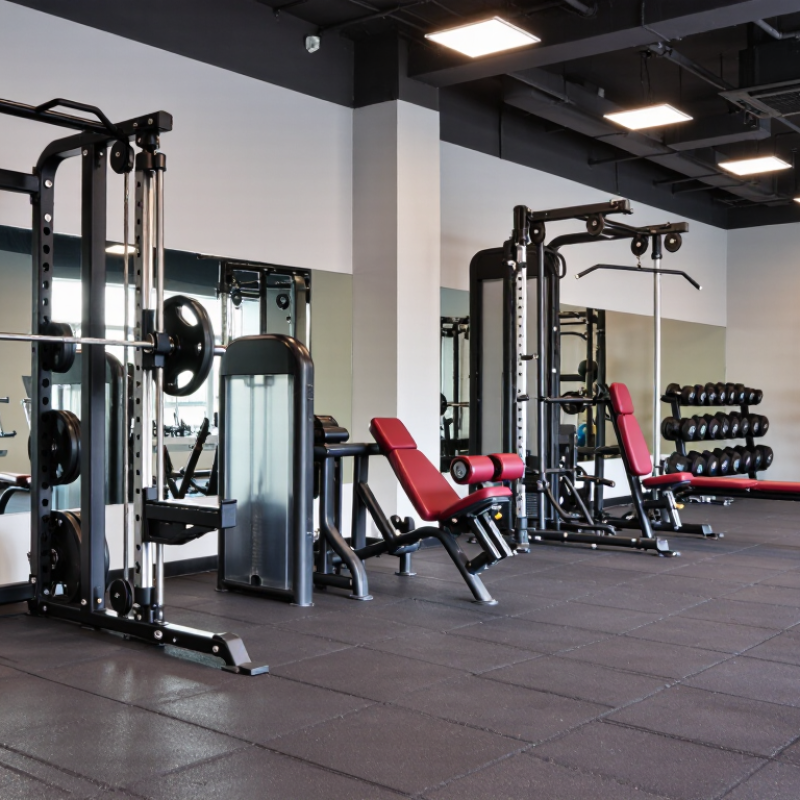
What Is the Best Commercial Strength Equipment for 2026?

Definition and Scope of Commercial-Strength Equipment

Commercial-strength equipment means resistance-training machines, racks, benches, and free weights built for repeated use by many people. It belongs in settings such as health clubs, school gyms, and workplace fitness rooms. The label describes intended use, not a single design or guaranteed lifespan. That distinction matters.

HFA’s 2024 Global Report counted 72.9 million U.S. health-club members in 2023. High traffic makes construction and upkeep practical concerns, not showroom details. A commercial unit should have a clearly stated working load, stable contact points, durable upholstery, and adjustments users can make without tools. Check the cable path, welds, frame movement, and pinch points during inspection. A crowded room also needs clear access around benches and racks. Still, “commercial grade” is not perfectly standardized across sellers, so the label alone proves little. Specifications and maintenance records tell a fuller story. A sturdy frame helps. Fit matters too. A machine that resists adjustment may be technically durable yet frustrating for new users. Evaluate the equipment in the space where it will actually be used.

Key Criteria for Evaluating Equipment in 2026

Choosing commercial strength equipment in 2026 starts with the people who will use it. Check whether seat, pad, and handle adjustments fit a range of body sizes. Test the full movement, not just the first few repetitions. A machine may feel smooth when unloaded and awkward under working weight. That detail matters.

Safety and serviceability deserve equal attention. Look for stable frames, clear adjustment markings, and guards that do not obstruct movement. Ask how often cables, upholstery, and moving joints need inspection, and whether replacement parts are readily available. Small faults can become costly downtime. I might give too much weight to a polished finish; it says little about how a machine holds up after years of daily use.

Measure the footprint, including space for users to enter and exit safely. Compare the stated capacity with the loads your members are likely to use. Digital tracking can help with training records, but only if staff can use it reliably and the system protects member data. Request a supervised trial with different users, then note comfort, adjustment time, noise, and any sticking points. Also compare installation, maintenance, and energy costs—not only the purchase price. A brief trial cannot predict every repair, so leave room for uncertainty.

What Is the Best Commercial Strength Equipment for 2026? — Key Evaluation Criteria

There is no single best choice for every facility. Compare equipment against your users, available space, training goals, service capacity, and total cost of ownership. Footprint figures below are approximate planning ranges for a typical station; check the selected model’s specifications and allow additional space for access and safe use.

Evaluation Criterion Selectorized Machines Plate-Loaded Machines Cable / Functional Trainers Power Racks and Rigs Dumbbells and Racks
Best Suited To Guided strength training, accessible exercise selection, and quick weight changes. Guided movement patterns with resistance supplied by weight plates. Adjustable exercises, cable-based resistance, and varied movement angles. Barbell training, including squats, presses, and other free-weight lifts. Free-weight training across a broad range of exercises and user abilities.
Training Versatility Usually limited to the movements designed for each machine; a circuit may require several stations. Typically focused on one or a few movements per unit; movement path is guided by the machine. High: adjustable pulleys and attachments can support many exercises, depending on configuration. High for barbell exercises; attachments can expand exercise options if they are compatible. High: users can perform many free-weight exercises, subject to available weights and coaching.
Typical Space Planning Allow roughly 1.2–2.0 m² per single station, plus room for entry, adjustment, and use. Allow roughly 1.0–2.0 m² per unit, plus plate access and usable clearance. Allow roughly 1.5–3.0 m² for a compact station; multi-user units may need more. Allow roughly 1.5–3.5 m² for a rack footprint, with additional clearance for lifts and safe loading. A rack-and-dumbbell area may use roughly 2–4 m² or more, depending on rack length and weight range.
Resistance and Progression Weight stacks provide selectable increments; confirm the stack weight and increment size meet user needs. Progression depends on available plates and the unit’s stated loading limits. Resistance depends on the cable ratio, stack configuration, and pulley setup; verify usable resistance at the handle. Progression depends on the bar, plates, rack setup, and safe working-load specifications. Progression depends on the available weight range and increments; plan for secure, organized storage.
User Adjustment Look for clearly marked adjustments, accessible controls, and a fit range that suits the intended users. Check seat, pad, and start-position adjustments, where provided, as well as clear loading access. Check pulley adjustment range, attachment changes, cable travel, and ease of reaching controls. Check J-cup and safety placement, adjustment range, and whether users can set them securely. Check that the weight range, handle grip, and rack layout are practical for the expected users.
Safety and Supervision Assess setup instructions, stable construction, moving-part guards, and clear user guidance. Assess plate retention, loading access, stability, and the need for supervision during use. Check cable condition, attachment security, pulley movement, and clear operating instructions. Confirm compatible safety arms or straps are available and can be correctly positioned for each lift. Plan for secure storage, clear walkways, and appropriate coaching for free-weight exercises.
Maintenance Considerations Inspect cables, pulleys, upholstery, adjustment points, and weight-stack movement on a regular schedule. Inspect pivots, bearings, upholstery, fasteners, and plate-loading areas; keep loading points accessible. Inspect cables, pulleys, carabiners, attachments, and weight stacks according to the maintenance instructions. Check fasteners, welds, rack components, safeties, and any attachments for wear or damage. Inspect handles, heads, racks, and storage cradles; keep weights organized to reduce trip hazards.
Commercial-Duty Checks Request documentation for intended commercial use, applicable safety testing, warranty coverage, and service support. Verify stated loading limits, intended-use documentation, replacement-part availability, and service arrangements. Verify cable and pulley specifications, attachment compatibility, intended-use documentation, and service arrangements. Verify stated working-load limits, compatible safety components, installation requirements, and inspection guidance. Verify weight accuracy and finish, rack stability, available replacement parts, and a safe storage plan.
Best Fit When You want straightforward setup, selectable resistance, and dedicated stations for common exercises. You want guided movements and plate-based resistance, and can accommodate plate storage and loading. You need adaptable exercise options from a relatively small number of stations. You prioritize barbell training and have suitable floor space, safety equipment, and supervision practices. You need flexible free-weight training and can provide enough storage, floor space, and user guidance.

Top Commercial-Strength Equipment Categories

Commercial strength equipment works best as a balanced system, not a room full of heavy machines. The American College of Sports Medicine’s 2025 Worldwide Survey of Fitness Trends ranked traditional strength training fifth. That signals lasting demand, but not one universal setup. Fit matters.

Selectorized machines suit beginners and busy circuits. Clear adjustment points, stable seats, and readable weight stacks help users move safely between exercises. Cable stations add flexible pulling and rotational movements, while plate-loaded machines provide a more free-weight feel. Yet, too many single-purpose stations can crowd a floor and leave equipment idle.

Racks, benches, barbells, and dumbbells remain core categories for progressive training. Choose commercial-grade frames, secure storage, and enough space for lifters to move without crossing paths. The Health & Fitness Association’s 2024 U.S. Health & Fitness Consumer Report counted 72.9 million gym members in 2023, underscoring the need to serve varied users. That figure does not tell operators which machines members prefer. A sensible mix needs local observation: track peak-hour queues, watch which adjustments confuse newcomers, and revise the layout when real use contradicts the plan. Some decisions will still be imperfect.

How to read this chart: These editorial fit scores (1–5) compare versatility, scalability, and suitability for commercial gyms; they are not measured industry statistics. The best choice depends on available space, budget, and training needs.

How to Match Equipment to Facility and Training Goals

The best commercial strength equipment is the equipment that fits your members, floor plan, and daily operating routine. A small training studio may get more value from an adjustable cable station, a bench, and compact dumbbells than from several large machines. Measure clear walking paths, doorways, and storage areas before ordering. Measure twice. Equipment that fits on paper can still crowd a busy training floor.

Match the setup to the work members actually do. For guided, repeatable workouts, selectorized machines can offer simple adjustments and clear movement paths. For strength-focused training, racks, bars, plates, and sturdy benches may support more exercise options, but they need thoughtful spacing and organized storage.

Mixed-use facilities often benefit from both, with adjustable stations serving different users throughout the day. Check seat adjustment ranges, grip positions, weight increments, and how easily staff can inspect moving parts. Ask coaches and maintenance staff to review the plan; their needs can differ from a buyer’s. Even careful planning misses things. A layout may look efficient but create awkward traffic near a rack, so test the spacing with people moving through the room before final installation.

Safety, Maintenance, and Long-Term Value Considerations

Safety is not just a sturdy frame or a warning label. In a busy facility, check that machines sit level, moving parts travel smoothly, and adjustment pins lock securely. Small details matter. A loose cable strand or cracked upholstery can signal a problem before a machine fails. Staff should know how to take equipment out of service and report faults clearly. Users also need enough space to enter, adjust, and exit each station without awkward twisting.

Maintenance affects both safety and long-term cost. Follow the equipment maker’s service schedule, and keep simple records of inspections, repairs, and recurring faults. Wipe sweat from contact points after use; clean around pulleys and weight stacks on a regular schedule. Keep records, too. A repair that appears minor can return if the underlying cause is missed. That is easy to overlook during a packed workday.

When comparing equipment, consider replacement parts, service access, warranty terms, and the expected daily workload. A lower purchase price may not mean better value if common parts take weeks to arrive. Yet paying more does not guarantee lower upkeep. Ask how routine service is performed, what parts wear fastest, and whether technicians can reach critical components without dismantling the whole unit. The answers may expose gaps in a glossy sales estimate.

FAQS

What does commercial-strength equipment mean?

It means equipment designed for repeated use by many people. It is not a guaranteed lifespan.

Where is this equipment commonly used?

It suits health clubs, school gyms, and workplace fitness rooms. Busy spaces need durable construction.

Does the commercial-strength label prove quality?

No. The label is not fully standardized across sellers. Check specifications, working loads, welds, cables, and maintenance records.

What safety details should staff inspect?

Machines should sit level, move smoothly, and have secure adjustment pins. Check cables, upholstery, frames, and pinch points. Small faults matter.

How much space should surround benches and racks?

Users need clear space to enter, adjust, exercise, and leave safely. Crowded layouts can force awkward twisting.

What maintenance routine helps equipment last longer?

Wipe sweat from contact points after use. Clean pulleys and weight stacks regularly. Record inspections, repairs, and repeated faults.

What should staff do when equipment develops a fault?

Remove the equipment from service and report the problem clearly. A loose cable strand deserves attention. Do not simply ignore it.

Is the lowest purchase price usually the best value?

Not always. Replacement parts may take weeks to arrive. Ask about service access, warranty terms, and common wear parts.

Can expensive equipment guarantee lower maintenance costs?

No. Higher prices do not remove upkeep problems. Ask whether technicians can reach critical parts easily. The sales estimate may miss something.

Conclusion

Choosing the best Commercial Strength Equipment for 2026 means looking beyond individual machines to how well a complete setup serves a facility and its members. Commercial-grade equipment is designed for frequent use, durability, and consistent performance. When comparing options, consider construction quality, adjustability, ease of use, available space, and how well each piece supports different strength-training needs.

Useful categories may include racks and benches, plate-loaded or selectorized machines, cable systems, and free weights. The right mix depends on the facility’s size, user experience levels, training goals, and expected traffic. Plan clear movement areas and prioritize equipment that can accommodate a range of exercises without making the layout crowded. Safety features, routine inspections, accessible replacement parts, and straightforward maintenance also matter. A thoughtful investment balances upfront cost with reliability and long-term value, helping create a safe, adaptable training environment that remains useful as member needs evolve.

Julian Mercer

Julian Mercer

Julian Mercer is a professional marketing specialist with a strong understanding of the company’s products, customer needs, and the practical challenges its customers face. He regularly contributes expert articles to the company website, sharing clear, useful guidance on product features,......