Choosing the China Best Cable Crossover Machine Manufacturer requires more than comparing prices or polished product photos. A reliable supplier should demonstrate practical manufacturing experience, clear engineering knowledge, and consistent quality control. This article examines how Chinese manufacturers design, produce, and test Cable Crossover Machine systems for gyms, studios, hotels, and rehabilitation facilities.
Look closely at the frame before judging the finish. A strong machine should use stable steel tubing, accurate welds, smooth pulley movement, and durable cable coatings. Check the weight stack, adjustment points, handles, protective covers, and floor contact areas. Small details matter during repeated training sessions. They affect safety, comfort, noise, and maintenance costs.
Manufacturer credibility also deserves careful review. Buyers should request factory videos, material specifications, load testing records, warranty terms, and export references. Independent inspections can provide additional confidence. Certifications may support trust, but they should be verified against the actual model and destination market. A professional supplier should explain customization limits, replacement-part availability, packaging methods, and delivery procedures without hiding weaknesses.
No supplier is perfect. Some factories may offer excellent welding but weaker documentation. Others may provide attractive customization but slower after-sales support. This comparison therefore focuses on evidence, not impressive promises. It considers production capability, product reliability, communication quality, and long-term service. The right decision depends on matching the manufacturer’s strengths with the buyer’s facility, budget, usage intensity, and safety expectations. Practical testing remains essential. A machine that looks impressive in a showroom may behave differently after months of daily use.
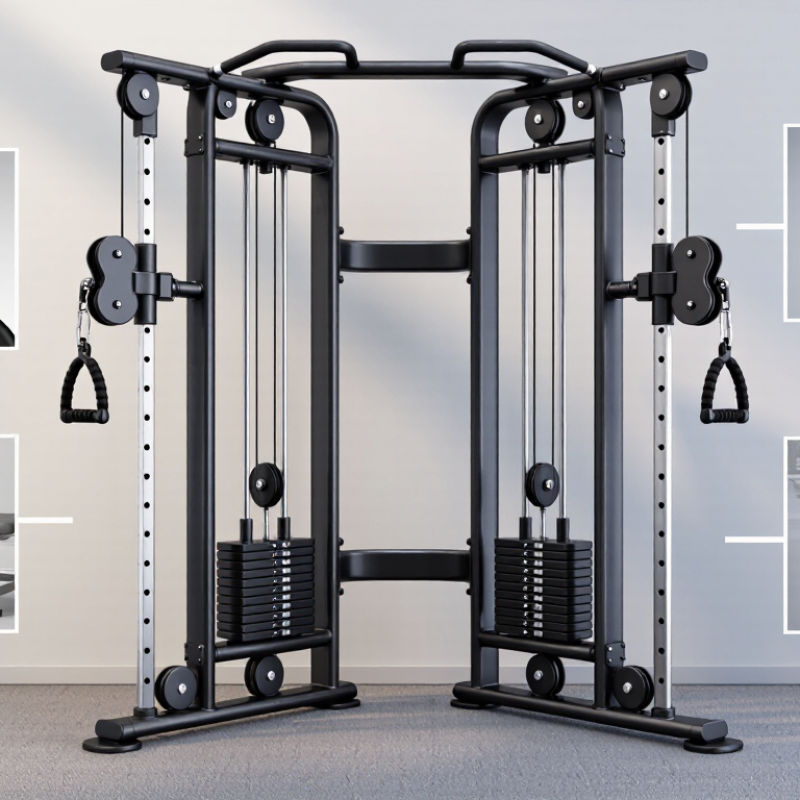
A cable crossover machine is not defined by its frame, finish, or advertised load alone. Under ISO 20957 safety requirements, its design must address foreseeable risks during normal training and reasonable misuse. The applicable parts should guide assessment, especially for strength equipment, stability, moving components, and user instructions.
In practical inspections, I check the base after repeated loading, not only when the machine is new. The frame should resist tipping, unwanted movement, and excessive deformation. Cables need suitable strength, secure terminations, and protection from crushing or sharp bends. Pulleys should rotate smoothly and remain properly guarded. Small details matter. A narrow pinch point near an adjustable handle can still cause injury.
Clear markings should show adjustment positions, maximum user load, and safe operating instructions. The machine should also explain maintenance intervals and cable replacement criteria. Testing by competent personnel can support reliable conformity evidence, but paperwork cannot repair a weak weld or loose anchor. That is not enough. Operators need routine checks for frayed strands, damaged guards, abnormal noise, and unstable feet. ISO-based evaluation improves consistency, yet every installation has different floors, users, and training habits. A careful manufacturer should document those limits honestly, even when the result exposes design improvements still needed.
| Evaluation Dimension | ISO 20957 Safety Focus | Objective Verification Data | Recommended Evidence | Purchasing Importance |
|---|---|---|---|---|
| Applicable Standard | General and specific safety requirements for stationary strength-training equipment. | Confirm assessment against ISO 20957-1 and the applicable strength-equipment part of the ISO 20957 series. | Current test report, technical file, risk assessment, and declared equipment classification. | Critical |
| Structural Stability | The machine should remain stable during intended use, foreseeable misuse, and test loading. | Base footprint, anchoring provisions, frame deflection observations, and stability-test results. | Stability test record, installation drawing, floor-loading information, and anchoring instructions. | Critical |
| Frame and Weld Quality | Load-bearing parts must withstand intended forces without hazardous fracture, excessive deformation, or sharp damage. | Material traceability, weld inspection, corrosion protection, and fatigue or static-load test results. | Material certificates, weld inspection records, coating specification, and test photographs. | Critical |
| Cable and Pulley System | Transmission components should operate reliably and avoid cable derailment, unexpected release, or access to hazardous moving areas. | Cable construction, termination method, pulley alignment, guarding, routing, and proof-test records. | Cable and pulley drawings, inspection checklist, replacement intervals, and functional test report. | Critical |
| Moving-Part Protection | Pinch, crush, shear, and entanglement hazards should be prevented or suitably guarded. | Guard coverage, clearance assessment, accessible hazard review, and verification throughout the full range of motion. | Hazard analysis, guarded-area photographs, dimensional inspection, and user-access assessment. | Critical |
| Load Selection and Adjustment | Adjustments should be secure, understandable, and designed to reduce unintended movement or load release. | Locking mechanism, selector-pin retention, adjustment range, label clarity, and smooth operation. | Adjustment test, selector-pin specification, operating instructions, and maintenance procedure. | High |
| End Stops and Range of Motion | The system should prevent over-travel and uncontrolled movement outside the intended exercise path. | End-stop presence, stop integrity, cable travel, handle travel, and repeatability of adjustment positions. | Range-of-motion test sheet, stop-component drawings, and service inspection records. | Critical |
| Handles and Attachments | Contact components should be secure, durable, comfortable to grip, and free from hazardous edges. | Attachment retention, handle strength, grip surface condition, edge inspection, and rotation performance. | Attachment test records, replacement-part list, user instructions, and visual inspection report. | High |
| Ergonomics and Accessibility | The equipment should allow intended users to enter, adjust, operate, and exit without avoidable hazards. | Adjustment reach, handle height range, user clearance, visibility of controls, and access around the frame. | Dimensional drawings, usability assessment, installation clearance plan, and operating instructions. | High |
| Sharp Edges and Surface Finish | Exposed surfaces should not create cutting, snagging, or abrasion hazards during normal use and maintenance. | Manual edge inspection, fastener inspection, coating adhesion, corrosion resistance, and surface-finish checks. | Incoming-quality checklist, coating specification, corrosion test data, and maintenance instructions. | High |
| Markings and User Instructions | Safety information, operating limits, adjustment procedures, warnings, and maintenance requirements should be clearly communicated. | Completeness, legibility, language coverage, label durability, and consistency between the manual and machine. | User manual, warning-label artwork, serial traceability, and installation instructions. | High |
| Maintenance and Inspection | Safety-related parts require defined inspection, servicing, adjustment, and replacement procedures. | Inspection frequency, cable wear criteria, fastener checks, lubrication points, and spare-part availability. | Preventive-maintenance schedule, service log template, spare-part catalogue, and technician instructions. | High |
| Quality-Control Traceability | Production controls should support consistent conformity between tested equipment and delivered units. | Serial-number tracking, batch records, incoming inspection, final functional testing, and nonconformity control. | Factory inspection plan, final-test checklist, calibration records, and corrective-action records. | Critical |
| Installation and Site Requirements | Safe performance depends on correct assembly, adequate clearance, suitable flooring, and proper anchoring where required. | Assembled dimensions, recommended clearance, machine mass, floor requirements, and anchoring method. | Installation manual, layout drawing, floor-load data, assembly torque table, and commissioning checklist. | High |
Note: ISO 20957 compliance should be confirmed for the specific equipment configuration, intended user group, installation conditions, and applicable edition of the standard. The verification items above are procurement criteria and do not replace formal conformity assessment.
A 100 kg stack suits general fitness and controlled rehabilitation. A 150 kg stack allows more progression for stronger users. A 200 kg stack needs a stiffer frame and stronger cables. More capacity is not always better.
Check tubing thickness, weld consistency, corner plates, and base contact. The frame should resist twisting during uneven pulls. Test both towers at different heights. Listen for movement. A quiet frame is a useful sign.
Pull every handle slowly and quickly. The cable should move smoothly without scraping or sudden clicks. Inspect protective coatings, end fittings, and guarded cable paths. Pulley bearings should turn without grinding or side play. Small brackets can still fail.
Not always. Pulley ratios can change effective resistance. Ask whether the number describes physical plates or user resistance. This affects exercise programming and purchase comparisons. The label may be unclear.
A narrow frame saves floor space. However, it may restrict pressing and crossover movements. A wider frame feels better for taller users. It also increases shipping and installation demands. Measure the room first.
Request static and repeated-use test records. Confirm the test method, sample identity, and calibration details. Ask for photographs of welds and pulley alignment. Check whether rejected parts are controlled separately. Paperwork can be incomplete.
Confirm whether the minimum applies per model, color, or container. A small trial order may reduce risk for a new gym. Yet packaging and spare parts may cost more. Calculate the full delivered cost. Cheap is not automatically safer.
The warranty should separately cover frames, bearings, upholstery, cables, and labor. Request response times and spare-part shipping responsibilities. A long frame warranty means little when cable parts arrive slowly. Review the service process carefully. I would value execution over promises.
Choosing the China Best Cable Crossover Machine Manufacturer requires more than comparing prices or appearance. A reliable evaluation should begin with ISO 20957 safety requirements, including structural stability, user protection, and performance consistency. Buyers should also understand pulley ratios: a 2:1 system generally provides a balance between movement speed and resistance, while a 4:1 system offers smoother cable travel with lower effective resistance. These differences directly affect training feel and product positioning.
Chinese Cable Crossover Machine models commonly offer weight stacks from 100 to 200 kg, but capacity should be assessed together with frame steel thickness, cable durability, bearing quality, pulley alignment, and documented load testing. The best manufacturer should demonstrate stable production capability, clear quality-control procedures, practical minimum order quantities, responsive warranty support, and verifiable export experience. By reviewing technical specifications, testing records, customization options, and after-sales service as a complete package, buyers can select equipment that delivers dependable performance, safer operation, and better long-term value.