The Selectorized Chest Press is becoming a practical fixture in modern strength facilities. Its guided movement, adjustable seat, and visible weight stack help users train the chest with fewer setup decisions. That matters in busy clubs, rehabilitation rooms, and hotel gyms. The Health & Fitness Association reported that the global fitness industry reached approximately $96.7 billion in revenue in 2023, with about 184 million members worldwide. More members also mean greater demand for equipment that feels safe, understandable, and efficient.
It is not a perfect solution.
A Selectorized Chest Press cannot replace coaching, progressive programming, or individual assessment. However, it can provide a consistent pressing path for beginners and experienced users. Dr. Wayne Westcott, a widely cited strength-training researcher, has stated, “Strength training is the most important exercise for maintaining functional ability as we age.” His observation supports the machine’s broader value beyond appearance. It connects resistance training with daily movement and long-term independence.
This guide examines the machine’s design, biomechanics, adjustment points, benefits, and limitations. It also considers user comfort, maintenance, accessibility, and training quality. The ACSM Worldwide Survey of Fitness Trends continues to place strength training and technology-supported exercise among important industry priorities. Still, reports cannot predict every user’s experience. A machine may fit one person perfectly and feel awkward to another. Small details matter, including handle width, back-pad angle, range of motion, and starting resistance. The right choice is therefore practical, evidence-informed, and open to review.
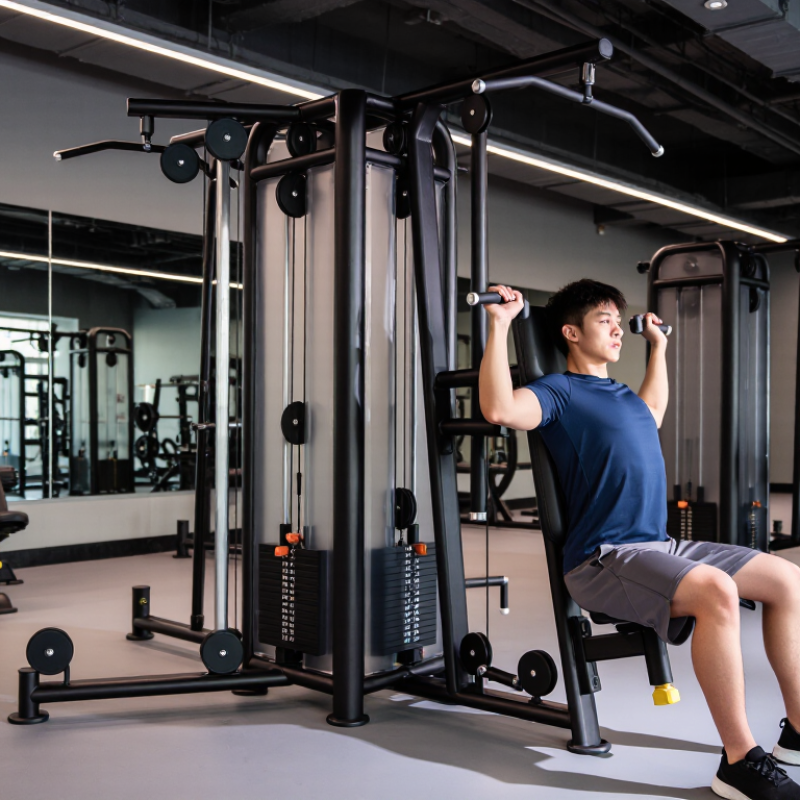
Definition and Basic Structure of a Selectorized Chest Press Machine
What Is a Selectorized Chest Press Machine?
A selectorized chest press machine is a guided resistance unit for horizontal pushing exercises. Its basic structure combines a steel frame, adjustable seat, back pad, handles, and an enclosed weight stack. The user selects resistance with a pin instead of loading plates manually. A cable, pulley, cam, or linkage transfers force from the stack to the pressing arms.
The seat sets the handle height against the user’s chest. The back pad stabilizes the torso and reduces unwanted movement. Handles usually move forward along a fixed or slightly curved path. This path can make pressing easier to learn. It also gives the machine a predictable resistance profile. Protective covers around the stack improve safety and reduce contact with moving parts.
The machine’s practical value is clear. A 2024 ACSM Worldwide Survey ranked traditional strength training fifth among global fitness trends. That result supports continued demand for accessible resistance equipment. However, a selectorized chest press is not automatically suitable for everyone. Shorter users may find the handles too high. Larger users may feel restricted by the back pad. Adjustable starting positions matter. They deserve careful inspection.
During use, the feet should remain stable, the shoulders should stay controlled, and the elbows should not flare excessively. Resistance should allow smooth repetitions without a sudden stack drop. I have seen users choose weight by appearance rather than control. That habit needs reconsideration. The strongest setting is not always the most useful one.
How the Weight Stack and Resistance System Work
What Is a Selectorized Chest Press Machine?
How the Weight Stack and Resistance System Work
A selectorized chest press machine uses a guided weight stack instead of loose plates. Each plate rests on metal rods inside the machine’s tower. A selector pin connects the chosen plates to a lifting cable. Move the pin lower for lighter resistance, or higher for heavier resistance. The numbers show a starting point, not a perfect measure of strength.
When you press the handles forward, the cable moves through pulleys and lifts the selected plates. The pulley system changes the direction of force and helps keep the motion controlled. Many machines also use a shaped cam near the pivot point. Its changing radius adjusts resistance through the press. This can make the middle portion feel harder than the beginning or end.
The seat and handle position affect how the resistance reaches your chest, shoulders, and triceps. I have found that a small seat adjustment can change the exercise noticeably. Your elbows should usually track comfortably behind your hands, without forcing the shoulders forward. The weight stack may pause briefly between repetitions, especially if the cable is loose. That pause is not always a problem, but it can reduce tension. Slow repetitions expose these details. A heavier setting may look impressive, yet it can shorten the pressing range and weaken control. Check the pin, cable path, and starting position before each set.
Key Muscle Groups Targeted During the Chest Press
What Is a Selectorized Chest Press Machine?
Key Muscle Groups Targeted During the Chest Press
A selectorized chest press machine uses a weight stack and guided handles. This setup supports controlled pressing without balancing a barbell. The main target is the pectoralis major, the broad chest muscle that creates most pressing strength. When the handles move forward, the chest contracts to bring the upper arms toward the body’s centerline.
The triceps brachii also work strongly. They straighten the elbows near the end of each repetition. The anterior deltoids assist by lifting the upper arms forward. Seat height changes this emphasis slightly. A lower seat may shift more work toward the upper chest and shoulders. A higher seat can feel more centered through the middle chest.
Small stabilizing muscles still contribute. The serratus anterior helps control the shoulder blades against the rib cage. The rotator cuff supports shoulder positioning during each push. Your abdominal muscles provide mild bracing, although the back pad reduces core demands. That support can improve focus, but it may hide weak stabilization. A common coaching mistake is chasing heavier plates while losing shoulder alignment. Keep the wrists straight and the elbows slightly below shoulder level. Stop before the shoulders roll forward. The machine feels simple. Technique still matters.
What Is a Selectorized Chest Press Machine? - Key Muscle Groups Targeted During the Chest Press
Muscle involvement and practical training considerations for a selectorized chest press
| Muscle Group |
Primary Function During the Exercise |
Relative Involvement |
Key Joint Action |
How the Machine Provides Resistance |
Technique Focus |
| Pectoralis Major |
Produces most of the force used to press the handles forward, especially through horizontal shoulder adduction. |
Primary |
Horizontal adduction of the shoulder; assistance with shoulder flexion depending on the handle path. |
A weight stack transfers resistance through a cable, pulley, or lever arm to the pressing handles. |
Keep the chest lifted, shoulders controlled, and press without allowing the shoulders to roll forward. |
| Anterior Deltoid |
Assists the chest muscles in moving the upper arms forward and toward the midline of the body. |
Secondary |
Shoulder flexion and horizontal adduction. |
The fixed path and machine resistance allow the front shoulder muscles to contribute without requiring free-weight stabilization. |
Adjust the seat so the handles are approximately level with the middle of the chest or slightly below shoulder height. |
| Triceps Brachii |
Extends the elbows as the arms move from a bent position toward the pressing position. |
Secondary |
Elbow extension. |
The machine maintains a guided pressing path, allowing the triceps to focus on elbow extension under consistent resistance. |
Finish the press with controlled elbow extension; avoid forcefully locking the elbows or hyperextending them. |
| Serratus Anterior |
Supports controlled movement and positioning of the shoulder blades as the arms press forward. |
Supporting |
Scapular protraction and upward rotation assistance. |
The back pad provides external support, reducing balance demands while the shoulder blades still participate in the pressing motion. |
Maintain smooth shoulder-blade movement without shrugging the shoulders toward the ears. |
| Rotator Cuff Muscles |
Help stabilize and center the head of the upper-arm bone within the shoulder socket. |
Stabilizing |
Dynamic shoulder stabilization rather than primary force production. |
The seat, back pad, and guided handles reduce balance requirements but do not eliminate the need for shoulder control. |
Use a comfortable range of motion and stop before the shoulders shift excessively or become painful. |
| Core Muscles |
Help maintain trunk alignment while the upper body applies force to the handles. |
Stabilizing |
Isometric trunk stabilization. |
The supported seated position generally reduces core demands compared with a standing or free-weight press. |
Keep the back supported and avoid leaning forward, arching excessively, or using momentum to move the weight. |
Machine overview: A selectorized chest press uses an adjustable weight stack and a guided handle path. It can simplify resistance selection and setup, while the seat, back pad, and handle position help standardize body positioning. Exact muscle emphasis changes with seat height, grip orientation, range of motion, and individual anatomy.
Proper Setup and Step-by-Step Operating Procedure
What Is a Selectorized Chest Press Machine?
Proper Setup and Step-by-Step Operating Procedure
A selectorized chest press machine uses a weight stack and adjustable seat to train the chest, shoulders, and triceps. Its guided path can help beginners control resistance more safely. Before sitting down, inspect the cable, pin, handles, and frame for visible damage. Report anything loose or cracked. Small checks matter.
Adjust the seat so the handles align with the middle of your chest. Your feet should stay flat, with your back supported against the pad. Set the weight pin at a manageable load. Do not begin with your strongest estimate. Grip the handles with relaxed wrists, then press forward while exhaling. Keep your elbows slightly below shoulder height. Stop when your arms are nearly straight, not locked. Return the handles slowly as you inhale.
Use steady movement rather than chasing a heavy number. Your shoulder blades should remain supported, and your hips should not lift from the seat. Pause briefly near full extension. Then control the return. If your shoulders roll forward, reduce the load and reset the seat. I sometimes see users choose a seat position by appearance alone; that is unreliable. A small adjustment can change joint comfort significantly. Stop if you feel sharp pain, numbness, or unusual pressure, and seek qualified guidance when needed. Consistent technique is more useful than one impressive set.
What Is a Selectorized Chest Press Machine?
Proper setup and a controlled one-repetition operating pattern
How to Use the Machine
Adjust the seat so the handles are approximately level with the middle of your chest. Keep both feet flat on the floor, your back and head against the pad, and your wrists straight. Align your elbows comfortably below shoulder height, press the handles forward without locking the elbows, then return them slowly until you feel a controlled chest stretch.
The chart illustrates a practical tempo target: about 1 second for the pressing phase and about 2 seconds for the return phase. Use a load that allows smooth movement and consistent technique; the exact resistance depends on the individual and the machine.
Safety Features, Benefits, and Common Limitations
What Is a Selectorized Chest Press Machine?
A selectorized chest press machine uses a guided lever system and a weight stack. Users select resistance with a pin, adjust the seat, and press forward from chest height. Its fixed movement path reduces balance demands, which can help beginners train with clearer technique. Adjustable handles and backrests also support different body sizes. Still, “guided” does not mean risk-free.
Safety features usually include a stable frame, controlled resistance, range-of-motion stops, and a visible adjustment pin. Some models provide safety catches or assisted starting positions. The World Health Organization recommends muscle-strengthening activities on at least two days weekly. A chest press can fit that schedule efficiently. The Health & Fitness Association reported 72.9 million U.S. fitness facility members in 2023, showing why simple, accessible equipment matters. In coached sessions, clear setup instructions often prevent more mistakes than machine design alone.
Benefits are practical.
The machine supports consistent loading, easier tracking, and quick transitions between users. It may suit older adults or people rebuilding strength under professional guidance. However, the fixed path can feel awkward for certain shoulders. It may also limit stabilizer involvement compared with free weights. The weight stack can become too light for stronger users, while seat adjustments may remain imperfect. That matters. A comfortable setup can still produce poor shoulder alignment. Users should start conservatively, keep wrists neutral, and stop when pain appears. Professional supervision remains valuable, especially when mobility or previous injuries affect pressing mechanics.
Conclusion
A Selectorized Chest Press is a strength-training machine designed to develop the chest, shoulders, and triceps through a guided pushing motion. It typically includes an adjustable seat, backrest, handles, and a built-in weight stack connected to a cable and pulley system. Users select the desired resistance by inserting a pin into the weight stack, allowing quick and convenient load changes without manually handling loose weights. As the handles are pushed forward, the resistance system provides controlled tension while the machine helps maintain a stable movement path.
To use the machine properly, adjust the seat so the handles align with the middle of your chest, sit with your back supported, grip the handles firmly, and press forward without locking your elbows. Return slowly to the starting position and maintain controlled breathing throughout each repetition. Safety features may include enclosed weight stacks, adjustable settings, and guided movement. The machine is accessible, stable, and useful for beginners, although its fixed path may limit natural movement and provide less balance-training benefit than free weights.