
0%

Choosing an Olympic Lifting Platform is a technical decision, not merely a purchasing exercise. Manufacturers must balance impact absorption, bar rebound, surface grip, noise control, and long-term structural stability. These details matter in training halls, collegiate facilities, rehabilitation centers, and competition venues.

The ACSM Worldwide Survey of Fitness Trends has repeatedly placed strength training among major global fitness priorities. The Sports & Fitness Industry Association’s participation reports also track continued interest in weightlifting and strength-based activities. However, these reports measure participation, not platform quality. That distinction is easy to miss. Market forecasts can also differ widely because researchers define “lifting platforms” differently. Buyers should examine the methodology, sample size, and regional coverage before trusting a growth percentage.

Dr. Mike Stone, a respected strength-and-conditioning researcher, has stated, “Strength is the ability to produce force.” That principle explains why platform construction deserves careful analysis. A stable Olympic Lifting Platform should support controlled force production while protecting the floor beneath it. Rubber thickness, hardwood composition, modular design, edge alignment, and moisture resistance all influence daily performance. The International Weightlifting Federation’s technical standards provide useful reference points, but commercial facilities may require additional acoustic and maintenance features. No single manufacturer fits every application. A platform for a private studio may prioritize portability, while a high-volume training center needs replaceable panels and stronger load distribution. This guide compares leading manufacturers through those practical criteria, while recognizing that published specifications do not always reflect field performance.
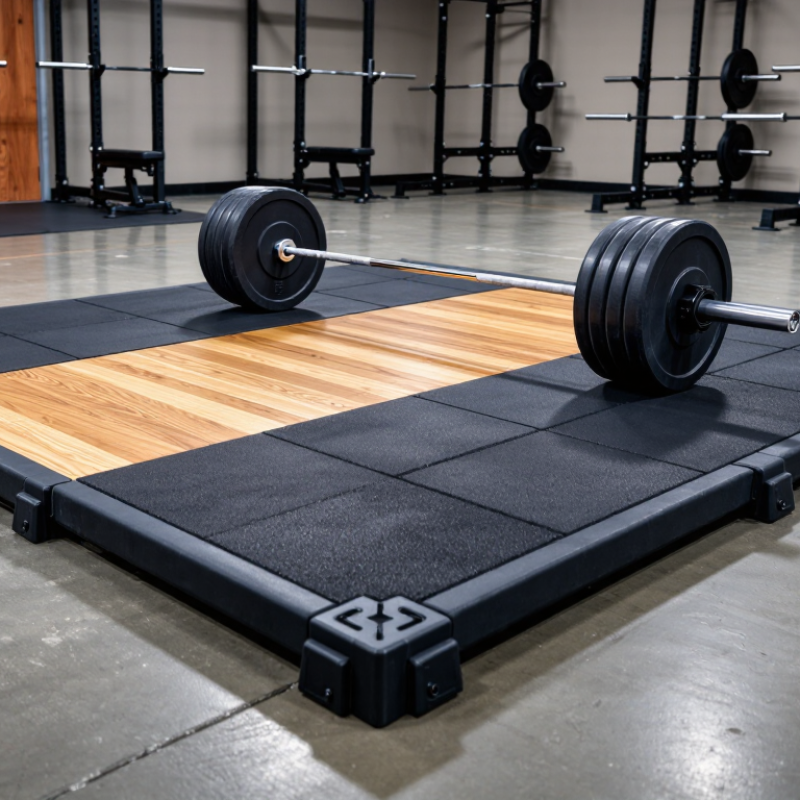
China Top Olympic Lifting Platform Manufacturers?

What Is an Olympic Lifting Platform?

An Olympic lifting platform is a reinforced surface designed for the snatch, clean, and jerk. It gives lifters stable footing during heavy, fast movements. It also protects the main floor when loaded barbells are dropped. A typical platform combines a hardwood center with dense rubber sections. Some training spaces use an all-rubber design. The choice depends on noise control, budget, and lifting style.

A well-made platform should remain flat under repeated impact. Its surface must provide grip without catching a lifter’s shoes. The wood should resist splintering, while the rubber should absorb shock without feeling unstable. Many platforms measure about 8 by 8 feet, but dimensions can vary. Experienced facility managers also check edge alignment, moisture protection, and floor clearance. These details are easy to overlook. I have seen platforms fail because the base was uneven, not because the top material was poor. That is a useful reminder when comparing manufacturers.

Tips: Place the platform on a level, solid floor. Check every joint before use. Keep the wood dry and clean chalk from the surface. Use proper bumper plates for controlled drops. A small gap beside the platform can trap dust or moisture. It seems minor. It is not. When evaluating Olympic lifting platform manufacturers, ask for material specifications, load testing information, warranty terms, and maintenance guidance. Clear documentation often shows more reliability than attractive photographs. Even then, specifications deserve practical testing. A platform can look excellent and still feel wrong underfoot.

How to Assess Chinese Olympic Lifting Platform Manufacturers

Choosing a Chinese Olympic lifting platform manufacturer requires more than comparing catalog prices. Start with technical fit. The International Weightlifting Federation’s 2023 Technical and Competition Rules specify a 4m by 4m competition platform. Ask whether the factory can hold those dimensions consistently, not only produce one attractive sample. Inspect plywood density, joint alignment, surface friction, edge protection, and rubber recovery after repeated drops. Request batch records and independent load or impact testing. Product photos are weak evidence.

The ISO Survey 2022 recorded over 426,000 ISO 9001 certificates in China, but certification alone does not prove platform quality. Check the certificate scope, issuing body, expiry date, and production site. The World Bank’s 2023 Logistics Performance Index ranked China 19th globally, yet shipping performance still varies between regions and suppliers. Confirm carton dimensions, moisture protection, replacement-part availability, and export documentation before ordering. A factory may quote quickly and document slowly. That gap matters.

Tips: Order a paid sample before committing to volume. Measure flatness with a straightedge and test several controlled drops. Review at least two recent commercial references. Speak with the quality manager, not only the salesperson. No checklist is perfect. I would also record small defects, because repeated minor gaps can become expensive installation problems.

Leading China-Based Olympic Lifting Platform Manufacturers

China-based Olympic lifting platform manufacturers serve gyms, training centers, schools, and private facilities worldwide. Leading suppliers usually combine rubber flooring, hardwood panels, steel frames, and shock-absorbing layers. Their production experience often covers both standard platforms and custom dimensions. This matters when ceiling height, room layout, or lifting style differs.

A reliable manufacturer should explain material specifications clearly. Ask about wood thickness, rubber density, frame tolerances, surface treatment, and edge protection. Factory quality teams may use moisture checks, weld inspections, dimensional testing, and repeated load tests. These details reveal more than polished product photographs. Export experience also helps with packaging, documentation, and installation guidance. Still, buyers should verify test records independently.

In practical use, a platform must stay stable under dropped barbells and repeated foot movement. A firm center supports clean lifts, while surrounding rubber reduces noise and floor impact. Anti-slip texture matters when hands or shoes become damp. Small gaps can collect chalk and dust. They are easy to overlook. No factory gets every detail right, and even experienced manufacturers may improve a design after field feedback. Buyers should request samples, inspect corners, and discuss replacement parts before placing large orders. Clear communication remains essential, especially when custom logos or unusual measurements are excluded. A thoughtful supplier admits limitations instead of promising everything.

Key Features and Customization Options to Compare

When comparing China’s top Olympic lifting platform manufacturers, begin with measurable construction details, not catalog photographs. The 2024 IWF Technical and Competition Rules specify a 4-by-4-meter platform for competition use. Training platforms may vary, but the lifting zone should remain stable, level, and slip-resistant. Ask for plywood grade, rubber density, surface hardness, and frame tolerance. Small details matter.

Customization separates a serious supplier from a basic fabricator. Buyers can request hardwood or laminated surfaces, different rubber thicknesses, recessed edges, modular tiles, and integrated plate storage. Noise control also deserves attention. A platform with dense rubber may reduce vibration, but excessive softness can affect bar rebound and balance. According to Grand View Research, the global fitness equipment market reached about 16 billion U.S. dollars in 2022 and is projected to grow through 2030. That growth encourages more options, but not every option improves lifting performance.

Professional buyers should request compression tests, dimensional inspection records, moisture resistance data, and replacement-part availability. The EN 14904 sports-flooring standard offers useful guidance on shock absorption and surface behavior, although not every lifting platform is certified under it. I once focused too heavily on maximum load claims. That was incomplete. Joint movement, repeated drops, and uneven flooring often expose weaknesses earlier. A manufacturer should also explain adhesive selection, curing time, packaging protection, and installation tolerances. Fancy finishes are less important than consistent panels and dependable after-sales support.

China Olympic Lifting Platform Manufacturers: Footprint Options to Compare

Platform footprint is one of the clearest specifications to compare when evaluating Olympic lifting equipment. The 4 m × 4 m footprint is the standard competition platform size defined by the International Weightlifting Federation, while smaller footprints are commonly selected for commercial gyms, studios, and home training spaces.

When comparing suppliers, also confirm surface material, rubber thickness, wood construction, edge protection, anti-slip performance, load rating, color options, logo placement, and the ability to customize dimensions.

How to Choose a Reliable Chinese Manufacturer

China Top Olympic Lifting Platform Manufacturers?

Choosing a reliable Chinese manufacturer requires more than comparing prices. In my experience, factory evidence matters more than polished online photos. Ask for production videos, material specifications, and recent inspection records. A dependable supplier should explain the platform’s wood layers, rubber density, steel frame, and surface coating clearly. Vague answers deserve caution. Very much so.

Request a sample or visit the factory when possible. Check whether the platform stays flat under repeated barbell drops. Inspect welds, corner joints, bolt holes, and rubber edges closely. Ask how the supplier controls moisture during storage and shipping. Confirm production capacity, lead times, packaging details, and replacement procedures in writing. Independent load testing can also reduce uncertainty. However, one test is not everything. Real gym use may reveal movement, noise, or surface damage that laboratory checks miss.

Tips: Compare at least three manufacturers using the same technical checklist. Verify business registration and export experience through reliable documents. Ask for references from similar commercial projects, not only small orders. Clarify tolerances, customization limits, payment stages, and inspection responsibilities before signing. Good communication is a practical quality signal. Notice response speed, technical accuracy, and willingness to admit limitations. I would not choose the cheapest offer automatically; that decision can become expensive after installation. A small trial order may expose weaknesses early, although it cannot predict every long-term issue.

China Top Olympic Lifting Platform Manufacturers? - How to Choose a Reliable Chinese Manufacturer
No. Evaluation Dimension Reliable Manufacturer Benchmark What the Buyer Should Verify Recommended Evidence Weight
1 Product Scope Offers complete Olympic lifting platforms, including the lifting surface, impact-absorbing areas, edge treatment and optional floor protection. Confirm whether the supplier manufactures the complete platform or only supplies rubber tiles, wood panels or accessories. Product drawings, component list and factory production photos. 10%
2 Platform Dimensions A competition-style platform can be specified at 4 m × 4 m in accordance with International Weightlifting Federation technical requirements. Training platforms may use different dimensions. Check finished dimensions, usable lifting area, overall height and dimensional tolerances before production. Approved technical drawing and pre-production sample measurements. 10%
3 Surface Construction The lifting area should be rigid, level and resistant to repeated barbell impact. Common constructions use hardwood or engineered wood combined with rubber impact zones. Ask for panel thickness, wood type, surface coating, joint design and resistance to moisture or abrasion. Material specifications, cross-section drawing and sample inspection. 12%
4 Rubber Performance Impact zones should provide adequate shock absorption, slip resistance and dimensional stability under repeated use. Verify rubber density, thickness, odor, hardness, compression behavior and whether recycled or virgin rubber is used. Material data sheet, third-party test report and physical sample. 12%
5 Load and Impact Testing A dependable supplier should define the intended use, maximum static load and impact conditions instead of relying only on a general “heavy-duty” claim. Request the test method, test load, drop or impact conditions, number of cycles and acceptance criteria. Signed test report with test date, specimen details and measured results. 14%
6 Safety and Stability The assembled platform should remain stable, level and free from dangerous movement, raised edges or gaps during lifting. Check anti-slip performance, joining method, floor contact, edge transitions and installation tolerances. Installation manual, assembly video and pre-shipment inspection checklist. 12%
7 Quality Management A documented quality-management process should cover incoming materials, production inspection, final assembly and nonconforming-product control. Verify the validity and scope of any ISO 9001 certificate through the issuing certification body. Current certificate, inspection records and quality-control procedure. 10%
8 Customization Capability The supplier should be able to adjust size, color, logo placement, edge configuration, packaging and installation requirements without compromising performance. Confirm minimum order quantity, tooling charges, artwork approval process and engineering-change controls. Approved artwork, prototype sample and written quotation. 8%
9 Export and Packaging Packaging should protect wood panels and rubber components from moisture, compression damage and impact during international transportation. Review carton or pallet dimensions, moisture protection, container loading plan, shipping marks and replacement-part policy. Packing specification, loading photos and detailed commercial invoice. 6%
10 After-Sales Support A reliable supplier should provide installation guidance, spare-part availability, warranty terms and a defined response process for defects. Check warranty exclusions, claim documentation, response time and responsibility for transport or replacement costs. Written warranty, service contact details and spare-parts list. 6%

Recommended purchasing rule: shortlist suppliers that can provide verifiable test records, approved technical drawings, physical samples and clear warranty terms. Product claims should be confirmed against the final specification and destination-market requirements before placing an order.

FAQS

What size should an Olympic lifting platform be?

A competition platform is commonly 4 by 4 meters. Training spaces may require different dimensions. Measure the room carefully.

Which materials should buyers inspect?

Check plywood density, rubber thickness, surface hardness, frame steel, and edge protection. Look for straight joints and level panels.

How can I test a factory sample?

Order a paid sample before placing a bulk order. Use a straightedge, measure flatness, and perform several controlled drops.

Are product photographs reliable evidence?

Not alone. Photos hide uneven joints, weak corners, and soft rubber. Physical inspection reveals more.

Does quality certification guarantee a good platform?

No. Verify the certificate scope, issuing body, expiry date, and production site. Certification supports trust, but does not replace testing.

What testing records should a manufacturer provide?

Request dimensional checks, moisture data, compression tests, impact tests, and repeated-load records. Independent reports are more convincing.

What customization options are useful?

Buyers may choose hardwood, laminated panels, thicker rubber, recessed edges, modular tiles, or plate storage. Avoid decorative features that reduce durability.

How should noise and vibration be managed?

Dense rubber can reduce vibration and floor impact. Excessive softness may affect balance and bar rebound. The compromise is not always obvious.

What export and installation details deserve attention?

Confirm carton size, moisture protection, replacement parts, documents, adhesive curing time, and installation tolerances. Small gaps can become costly problems.

How can I judge a manufacturer’s communication?

Speak with the quality manager, not only the salesperson. Ask for recent commercial references. A supplier admitting limitations may be more reliable.

Conclusion

An Olympic Lifting Platform is a dedicated training surface designed to support explosive weightlifting movements such as the snatch and clean and jerk. It typically combines a resilient central lifting area with shock-absorbing rubber sections to protect athletes, equipment, and flooring. When evaluating Chinese manufacturers, buyers should examine material quality, structural stability, production standards, load capacity, dimensional accuracy, and quality-control procedures. Clear communication, sample inspection, and transparent documentation are also important before placing an order.

A comparison of leading China-based manufacturers should focus on practical capabilities rather than reputation alone, including experience with commercial gyms, export support, packaging, and production consistency. Key features may include platform thickness, surface texture, noise reduction, moisture resistance, logo placement, color options, modular construction, and custom dimensions. To choose a reliable supplier, request detailed specifications, verify manufacturing capacity, review independent customer feedback, confirm delivery terms, and discuss warranty and after-sales support. A dependable partner should offer consistent quality, realistic lead times, responsive communication, and solutions suited to the buyer’s training environment and budget.

Amelia

Amelia

Amelia is a professional marketing specialist with a deep understanding of the company’s products, services, and the needs of the customers they are designed to support. She regularly contributes expert articles to the company website, sharing clear, practical insights that help readers compare......