
The Biomechanical Rationale of Iso-Lateral Technology in Commercial Strength Equipment
In modern commercial strength conditioning, the shift from traditional fixed-axis guide-rod machinery to Iso-Lateral (Unilateral) plate-loaded leverage equipment represents one of the most critical structural advancements in fitness engineering over the past three decades. Sourcing high-grade iso-lateral presses from established China wholesale manufacturers allows global gym owners, equipment distributors, and enterprise buyers to deploy elite-level biomechanical equipment at highly competitive capital expenditures.
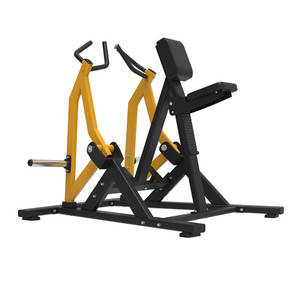
The defining technical feature of Iso-Lateral machinery is its independent movement arms. Traditional chest press or overhead press machines lock the user into a rigid, symmetric plane of movement. However, human musculoskeletal anatomy is inherently asymmetrical. One side of the human body dominant in neural recruitment, arm length, or shoulder girdle flexibility often overcompensates on fixed bars, worsening bilateral strength imbalances and straining shoulder or hip joint capsules.
Core Biomechanical Insight: Iso-Lateral press systems replicate the natural converging and diverging arc of movement typical of free-weight dumbbell exercises, while maintaining the structural safety, self-spotting leverage, and load capacity of heavy-gauge plate-loaded commercial machinery.
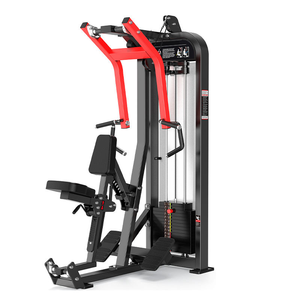
When performing an incline or flat chest press on an Iso-Lateral plate-loaded machine, the handles move along a converging arc—starting wider at the bottom stretch position and coming closer together at peak neuromuscular contraction. Conversely, pulling movements (such as Iso-Lateral Rows or Lat Pulldowns) utilize a diverging arc. This spatial trajectory mirrors the natural biomechanics of human joints, minimizing torque on the rotator cuff while maximizing target muscle recruitment (Pectoralis Major, Anterior Deltoids, and Latissimus Dorsi).
Converging & Diverging Arcs
Custom-engineered pivot axes replicate anatomical muscular contraction paths for maximum muscle fiber isolation.
Unilateral Independence
Independent arm operation eliminates muscular dominant-side compensation and allows isolated rehabilitation protocols.
High Torque Bearings
Heavy-duty pillow block bearings ensure silent, zero-friction movement execution even under maximum plate load capacity.
Manufacturing Benchmarks & Engineering Specifications
When evaluating China wholesale suppliers for Iso-Lateral press equipment, enterprise B2B purchasers must look beyond cosmetic paint finishes and inspect key engineering metrics: structural steel tubing gauge, weld integrity, bearing configurations, and ergonomic adjustability. Below is an engineering comparison matrix defining commercial-grade standards versus sub-standard domestic equipment.
| Specification Feature | Commercial Benchmark (Export Grade) | Standard Grade Equipment | Impact on Facility Performance |
|---|---|---|---|
| Steel Frame Tubing | 11-Gauge (3.0mm) Q235/Q345 | 14-Gauge to 16-Gauge (1.5mm–2.0mm) | Prevents frame flexing under heavy loads; extends lifetime to 10+ years. |
| Pivot Bearings | Industrial Sealed Pillow Block Bearings | Nylon Bushings or Unsealed Bearings | Delivers buttery-smooth rotation; resists sweat corrosion and dust wear. |
| Upholstery & Foam | High-Density Molded PU + Anti-Bacterial Vinyl | Rebonded Foam + Low-grade PVC | Resists cracking, tearing, and sagging under high daily user turnover. |
| Surface Treatment | Dual Electrostatic Powder Coating (Thermoset) | Single Layer Spray Paint | Provides extreme scratch, chip, and rust resistance in humid climates. |
| Adjustment Pins | Pneumatic Spring-Assisted Chrome Pins | Manual Screw Knobs / Loose Pins | Enables rapid, hassle-free seat setup for athletes and gym members. |
Future Technology & Development Trends in Iso-Lateral Strength Equipment (2025–2030)
The global commercial fitness market is experiencing a profound technological transformation. As health club chains, university strength rooms, and military training bases demand enhanced efficiency, commercial manufacturers in China are pioneering critical engineering advancements:
1. Variable Resistance Cam System Integration
Traditional plate-loaded machines maintain a static mechanical advantage throughout the range of motion. Modern Iso-Lateral designs now incorporate variable resistance cams and adjusted leverage linkages. This ensures that resistance increases precisely where the athlete's muscle is mechanically strongest, and lightens slightly at weak joint angles, significantly reducing tendon strain while maximizing muscle hypertrophy.
2. Sensor-Ready IoT Smart Load Tracking
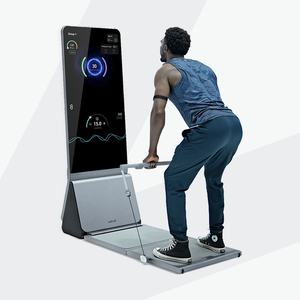
Smart gym environments require seamless data integration. Next-generation Iso-Lateral machines exported from China are equipped with pre-engineered mounting brackets for velocity-based training (VBT) sensors, rotary encoders, and wireless load-cell transmitters. Gym operators can provide members with digital repetition counting, peak power tracking (Watts), and range-of-motion feedback via real-time mobile app synchronization.
3. Precision Robotic Laser Welding & Modular Frame Architecture
To reduce container shipping volumes while maintaining structural stiffness, suppliers have moved toward modular laser-cut structural frames. Using automated 6-axis robotic laser welders guarantees 100% weld penetration and cosmetic perfection, eliminating human margin-of-error and ensuring that replacement parts align with micrometer-level precision across worldwide installations.
4. Custom Ergonomic & Aesthetic Personalization (OEM/ODM)
Today's fitness brands require distinct visual identity. Commercial exporters now offer complete custom color matching (RAL & Pantone standard powder coating), two-tone high-density vinyl upholstery with custom logo embroidery, and laser-cut stainless steel branding plates integrated directly into the crossmembers of the Iso-Lateral press frame.
Global B2B Sourcing Strategy & Procurement Trends
Direct factory procurement of commercial fitness machinery from China has evolved from simple cost-cutting to a strategic partnership model focused on custom OEM engineering, high supply chain resilience, and rapid production agility.
- Container Space Optimization (Knocked-Down vs. Semi-Assembled Packing): High-volume wholesale purchasers benefit from customized flat-pack engineering. By designing equipment frames with precise, heavy-duty bolting flanges, export suppliers maximize 40ft High-Cube container capacity—reducing international shipping costs per unit by up to 35%.
- Compliance with International Safety Standards: Top-tier Chinese strength equipment exporters adhere strictly to EN ISO 20957-1 / EN 957-2 commercial fitness machinery safety standards. Compliance testing includes static weight load capacity tests (over 1,000 kg), dynamic fatigue testing over 100,000 continuous cycles, and 48-hour salt-spray anti-corrosion testing.
- Lead Time Standardization and Supply Chain Integration: Leading manufacturers utilize localized steel supply chains, in-house tube bending, CNC machining, and automated powder coating lines, reducing standard production cycles to 25–35 days for full-container OEM orders.