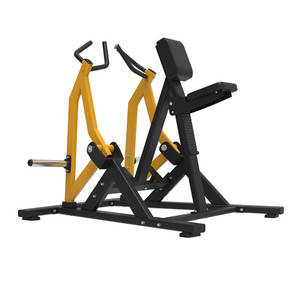
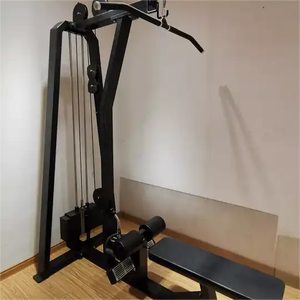
Explore our heavy-duty selectorized, plate-loaded, and multi-station cable rowing solutions built to institutional specifications.
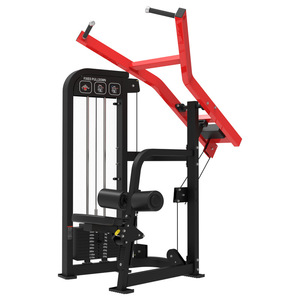
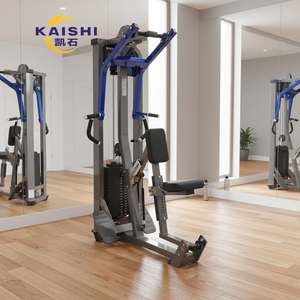
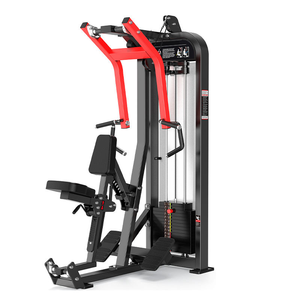
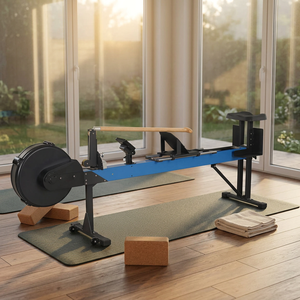
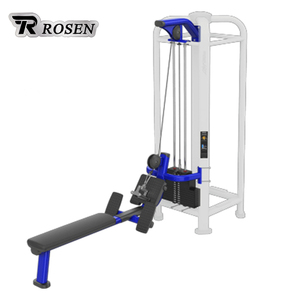
The global commercial strength equipment sector has experienced a profound shift toward biomechanically optimized, heavy-duty resistance systems. As facility operators, collegiate athletic programs, military bases, and enterprise commercial fitness centers expand, demand has intensified for high-durability, custom OEM seated cable row machines. The seated cable row remains a cornerstone biomechanical compound pull exercise targeting the latissimus dorsi, rhomboids, middle trapezius, and posterior deltoids while minimizing axial spinal compression.
For international buyers, fitness distributors, and brand owners, navigating the procurement landscape requires evaluating structural integrity, manufacturing engineering standards, cable friction metrics, and ergonomic adaptability. Modern custom OEM seated cable row manufacturers must go beyond rudimentary welding; they must deliver precision-engineered machinery certified under global ISO9001 quality management systems and EN ISO 20957-1 commercial fitness equipment standards.
Information Gain Insight: Modern OEM manufacturing contracts increasingly specify 11-gauge (3.0mm thickness) high-tensile structural steel tubing, robotic MIG welding, electrostatically applied thermo-cured double powder coatings, and maintenance-free sealed linear bearings to withstand over 500,000 continuous rep cycles under maximal commercial load.
This industry whitepaper provides an exhaustive technical analysis of seated cable row architecture, custom manufacturing capabilities, market evolution trends for 2025–2030, biomechanical resistance mapping, and actionable procurement insights designed for B2B decision-makers worldwide.
Precision fabricated using 11-gauge (3.0mm) to 8-gauge (4.0mm) structural steel tubing for zero frame flex under extreme loads.
Converging and divering mechanical cable pathways optimized for dynamic scapular retraction and muscle activation.
7x19 strand jacketed US-made or premium imported aircraft cables rated for up to 4,200 lbs breakdown tension.
The efficacy of a commercial seated cable row depends heavily on cable trajectory physics and user positioning ergonomics. Unlike fixed-path lever rows, cable-driven systems introduce continuous tension throughout the concentric and eccentric phases of contraction. Professional strength facilities require equipment that accommodates varying athlete limb lengths while eliminating biomechanical dead spots.
Top-tier custom OEM seated cable row manufacturers utilize laser-cut Q235B or Q345 structural steel profiles. Frames are mandrel-bent to minimize stress points and assembled using multi-axis automated robotic welding arms. This guarantees seamless weld penetration and eliminates structural fatigue over decades of high-volume usage.
Frame finish coatings play a vital role in preventing corrosion induced by humidity and perspiration. High-end OEM facilities employ a multi-stage pretreatment process including automated shot-blasting, alkaline degreasing, zinc-phosphate conversion coating, and dual-layer electrostatic powder coating thermo-cured at 200°C (392°F). This yields a scratch-resistant finish exceeding 1,000 hours of ASTM-B117 salt spray testing.
Friction within a cable machine distorts the intended load felt by the user. Premium OEM cable row systems integrate deep-grooved fiberglass-reinforced nylon pulleys equipped with sealed Japanese NSK or SKF precision ball bearings. This configuration reduces the mechanical coefficient of friction to under 0.03.
Selecting the optimal equipment design depends on target facility demographics, floor area, budget, and strength training objectives. Below is an engineering comparison matrix compiled by our technical design team:
| Specification Parameter | Selectorized Pin-Loaded Row | Iso-Lateral Plate-Loaded Row | Multi-Station Jungle Low Row |
|---|---|---|---|
| Primary Target Market | Commercial Clubs, Hotels, Wellness | Athletic Performance, Hardcore Gyms | High-Density Training Facilities |
| Structural Frame Steel | 11-Gauge 50x100mm Oval Tube | 11-Gauge 75x75mm Square Tube | 8 to 11-Gauge Heavy Modular Steel |
| Resistance Mechanism | Cold-Rolled Weight Stack (100–150kg) | Standard Olympic Weight Plates | Dual/Quad Weight Stacks (100kg ea) |
| Adjustability Features | Gas-Assist Chest/Footplate Pads | Multi-Angle Swivel Handles & Seat | Multi-Position Adjustable Pulleys |
| Scapular Biomechanics | Fixed or Swivel Cable Trajectory | True Converging/Diverging Motion | Free-Motion Cable Ergonomics |
| Maintenance Interval | Quarterly Cable/Bushing Check | Semi-Annual Pillow Block Bearing Lube | Quarterly Multi-Cable Tensioning |
| Footprint Efficiency | Medium (~1.8 sq. meters) | Medium-Large (~2.2 sq. meters) | High Efficiency per User Station |
Partnering with an established manufacturer guarantees that your commercial strength line reflects your brand’s unique identity and engineering standards. Drawing from over 40 years of commercial gym equipment manufacturing heritage, our partner facilities emphasize built-to-order manufacturing flexibility rather than off-the-shelf mass production.
Over 30 custom powder-coat frame finishes paired with premium two-tone heavy-duty commercial vinyl upholstery with double-stitched seams.
Custom laser-cut stainless steel logo plates, custom weight stack shroud decals, and embroidered headrests/seat pads for complete OEM brand integration.
In-house CAD and 3D architectural layout experts map out equipment footprints, user walkways, and structural placement before order finalization.
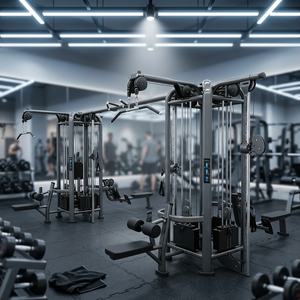
Whether you require a single standalone selectorized seated row or an expansive multi-station 8-jungle cable system, our production lines adhere to lean manufacturing principles. Every component undergoes rigorous Quality Assurance (QA) inspections at raw material intake, post-welding, post-powder-coating, and final assembly testing prior to international export packaging.
Procurement teams and facility operators must future-proof their capital investments by recognizing emerging industry macro-trends. The strength training hardware market is undergoing rapid modernization driven by digital connectivity, biomechanical ergonomics, and sustainability initiatives.
Modern commercial facilities are increasingly requesting OEM machinery pre-fitted with digital sensor ports and linear position transducers. Smart seated cable rows allow athletes to track rep velocity, power output in watts, and peak concentric force output directly via Bluetooth/ANT+ connectivity to mobile apps or cloud-based athlete management systems.
With global ESG (Environmental, Social, and Governance) mandates governing corporate wellness and public sector procurement contracts, manufacturers are shifting toward VOC-free powder coating formulations, energy-efficient infrared curing ovens, and 100% recyclable structural steel alloys.
As commercial real estate costs rise globally, equipment efficiency per square meter has become a paramount metric. Future seated cable row designs prioritize modularity—enabling a single seated row frame to integrate with lat pulldown towers, cable crossover rigs, and storage racks without expanding the structural base footprint.
Connect directly with our senior engineering and export sales specialists to receive custom structural quotes, CAD floor plans, and comprehensive OEM catalog specifications.
Expert answers to common technical, logistical, and customization questions from commercial fitness equipment buyers.
Custom OEM Seated Cable Row Manufacturers & Exporter Whitepaper © Commercial Strength Equipment Global Procurement Guide.