
Explore our factory-direct heavy-duty commercial equipment lineup engineered for high-traffic fitness clubs, collegiate varsity weight rooms, and military training centers worldwide.
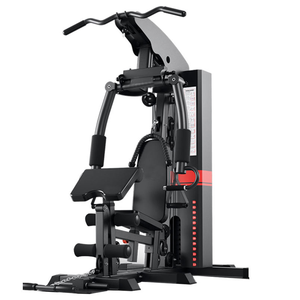
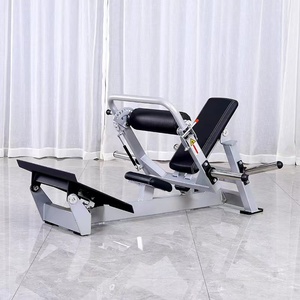
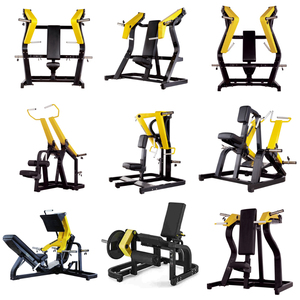
In the competitive commercial strength equipment sector, the T Bar Row machine stands out as an irreplaceable cornerstone for developing posterior chain strength, specifically targeting the latissimus dorsi, rhomboids, middle and lower trapezius, and posterior deltoids. For institutional buyers, health club chains, distributors, and equipment brand owners, sourcing from established OEM (Original Equipment Manufacturer) and ODM (Original Design Manufacturer) T Bar Row suppliers requires evaluating mechanical leverage, frame rigidity, pivot point friction, and user adjustability.
Unlike standard free-weight barbell rows—which impose significant axial loading and spinal compression on the lumbar region—a professionally engineered commercial T Bar Row utilizes fixed-pivot leverage or chest-supported stabilization. This biomechanical alignment shifts shear forces away from the lower back while enabling maximum hypertrophy and explosive velocity output. As commercial fitness facilities prioritize hypertrophy-focused plate-loaded equipment, demand for heavy-duty, multi-grip, chest-supported, and landmine-style row machines has experienced a multi-year upward trajectory.
Commercial durability begins with raw metallurgical standards and precision manufacturing. As a premier strength equipment manufacturer with roots grounded in heavy-duty commercial fabrication, our production workflow adheres to strict ISO9001 and EN957 structural safety standards.
Fabricated using 11-gauge (3.0mm nominal wall thickness) Q235 and Q355 structural steel tubing. Oversized 50x100mm rectangular and 76mm round profiles ensure zero frame deflection under 500+ kg static loads.
Precision heavy-duty pillow block bearings and industrial Japanese ball bearings eliminate lateral slop and friction, delivering frictionless rotational movement through the entire concentric and eccentric movement path.
Multi-stage zinc-phosphate surface pretreatment followed by electrostatically applied thermo-cured powder coating. Resists scratches, sweat corrosion, and high-impact dumbbell/plate strikes in commercial environments.
| Model Architecture | Target Primary Biomechanics | Steel Tube Spec | Pivot System | Ideal Commercial Footprint |
|---|---|---|---|---|
| Chest-Supported T-Bar Row | Upper back isolation, Latissimus dorsi (Zero spinal load) | 50x100x3.0mm Q235 Steel | Dual Industrial Pillow Block Bearings | Commercial Gyms, Rehab Facilities, Sports Teams |
| Plate-Loaded Landmine T-Bar Platform | Multi-plane heavy rowing, Dynamic rotational pulling | 75x75x3.0mm Structural Square Tube | 360-degree Universal Swivel Joint | Functional Training Zones, High School Weight Rooms |
| Leverage Neutral-Grip Iso-Lateral Row | Unilateral lat development, Independent arm movement | 11-Gauge Cold-Rolled Steel | Sealed Precision Ball Bearings | Collegiate Varsity Weight Rooms, Pro Athlete Centers |
| Incline Seated T-Bar Row Machine | Lower trapezius, Rhomboid thickness, Brachialis activation | Heavy Oval & Rectangular Steel Tube | Self-Aligning Bushing & Bearing Pivot | 24/7 Commercial Fitness Franchises & Clubs |
As commercial fitness facility owners upgrade their equipment offerings to retain members and satisfy strength training demands, OEM/ODM manufacturers are driving significant technological advancements in back training equipment. Procurement specialists must understand these technical evolutions when evaluating suppliers for long-term contract manufacturing.
Legacy fixed handles force the wrist and elbow into compromised positions. Modern ODM T Bar Row designs incorporate swiveling 360-degree handles and multi-grip hand placement options (narrow neutral, wide pronated, 45-degree semi-supinated). This allows athletes to adjust their wrist alignment dynamically, optimizing muscle fiber recruitment along the latissimus dorsi and minimizing medial epicondylitis (Golfer's Elbow) stress.
Standard gravity-fed leverage arms suffer from uneven resistance curves—where weight feels excessively heavy at the stretch position and light at peak contraction. Advanced OEM designs integrate curved cam leverage arms or secondary weight horn loading pegs. This matches the human strength curve, maintaining maximum resistance at peak muscular contraction where the latissimus dorsi is fully shortened.
Traditional low-density foam pads collapse quickly under heavy commercial usage, leading to sternum discomfort during heavy rowing sets. Premier manufacturers utilize high-density molded EVA/polyurethane foam cores encapsulated in commercial-grade, tear-resistant, sweat-proof, antimicrobial vinyl upholstery. Ergonomic sternum contours prevent diaphragm restriction, enabling unrestricted respiratory expansion during peak effort.
Commercial buyers increasingly demand private label customization to reinforce their brand identity. Custom OEM/ODM offerings include precision CNC laser-cut logo crossmembers, custom shroud graphics, two-tone powder coating (e.g., matte black frame with high-gloss crimson red moving arms), and custom embroidered vinyl upholstery badges.
Global supply chains for fitness equipment have evolved significantly. B2B importers, commercial facility outfitters, and brand owners no longer look solely at unit price. Instead, procurement strategies center on total cost of ownership (TCO), supply chain flexibility, manufacturing transparency, and rapid delivery compliance.
To mitigate rising global ocean freight rates, modern commercial T Bar Row machines are engineered with modular knock-down (KD) assembly structures. Heavy mainframes break down flat into ultra-dense wooden crate packaging, maximizing container loading capacity by up to 45% compared to fully welded sub-assemblies.
Facility developers and boutique gym chains require customized equipment without ordering thousands of units. Leading factories offer low Minimum Order Quantity (MOQ) customization thresholds, allowing buyers to select custom frame colors, wear guards, laser-cut plates, and pad colors starting at small batch order runs.
Empowered by 3D SolidWorks and CAD engineering, top ODM factories deliver custom equipment prototypes within 15–20 days. Integrated facility layout specialists generate detailed 2D/3D weight room floor plans, giving procurement officers precise spatial visualization prior to mass production.
Drawing on more than four decades of dedicated commercial strength equipment engineering experience, our manufacturing headquarters combines proven heavy-duty structural design with modern precision fabrication technology. Originally established with a passion for building unbreakable equipment, we have evolved into a trusted global supplier for professional athletic facilities, commercial gym chains, military bases, and international fitness distributors.
Every piece of equipment—from our flagship Pro Series power racks and selectorized machines to plate-loaded glute drives, hyper-extensions, and T Bar Rows—is constructed to perform under intense daily commercial volume. Our manufacturing infrastructure spans full-process production in-house:
Utilizing automated fiber laser cutters and multi-axis robotic welding cells, every structural joint achieves deep weld penetration and flawless aesthetic beads. High-stress points are reinforced with gusseted steel plates to eliminate frame flexing under heavy commercial loads.
Prior to packaging, production samples undergo rigorous static load testing (up to 1,000 kg), dynamic cycle endurance testing (over 200,000 cycles without bearing failure), and salt-spray powder coat adhesion testing to guarantee long-term corrosion resistance.
Before finalizing a supplier contract for T Bar Row machines or plate-loaded strength equipment packages, procurement teams should verify the following engineering criteria: