
Engineered for high-volume commercial athletic facilities, professional training centers, and fitness clubs. Explore heavy-gauge steel architecture designed for maximum tensile strength, safety, and versatility.
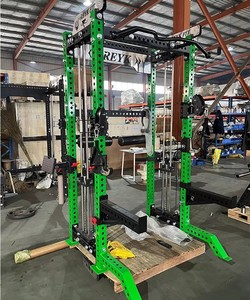
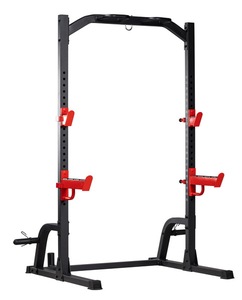
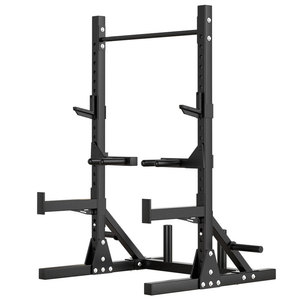
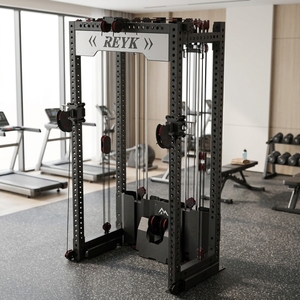
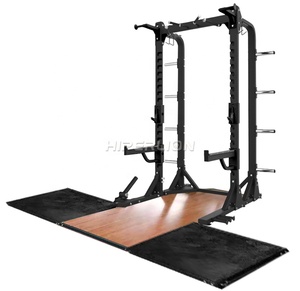
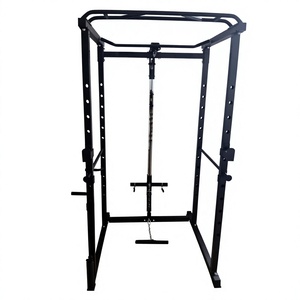
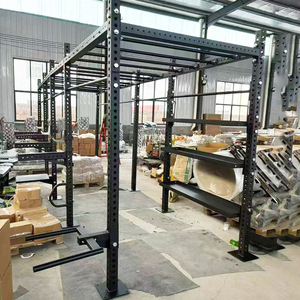
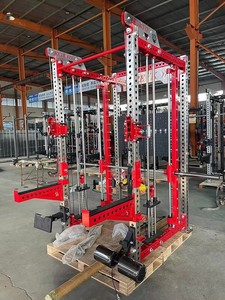
In the contemporary commercial strength training landscape, the squat rack serves as the central anchor of athletic facilities, commercial health clubs, university weight rooms, and tactical conditioning centers. Sourcing squat racks from top-tier original equipment manufacturers (OEMs) and suppliers requires a comprehensive evaluation that extends far beyond initial price points. Decision-makers must evaluate key parameters including structural metallurgy, tensile yield strength, modular scalability, floor space efficiency, electrostatic coating durability, and international safety compliance standards such as ISO 20957 and EN 957-2.
This industry report examines the core capabilities of leading global squat rack factories, details critical manufacturing technologies, analyzes long-term procurement trends, and outlines essential criteria for establishing direct factory OEM/ODM partnerships.
Leading squat rack factories distinguish themselves through advanced metal fabrication processes, proprietary engineering designs, and strict quality control workflows. Evaluating a factory's technical capabilities requires looking at several core manufacturing pillars:
Top-tier factories use 11-gauge (3mm minimum wall thickness) 3" x 3" or 2" x 3" cold-rolled structural steel tubing. This high-density carbon steel resists structural torsion, frame deflection, and metal fatigue even under dynamic impact loads exceeding 1,500 lbs.
Advanced factories deploy multi-axis fiber lasers and CNC punching centers to create exact 1-inch or 2-inch hole spacing (such as Westside spacing patterns) with zero metal burring. Integrated laser-cut numerical indicators streamline accessory adjustments in commercial settings.
To resist corrosion, sweat oxidation, and high-impact rack abrasion, leading suppliers use a dual-stage finishing process: an anti-corrosion zinc undercoat followed by an electrostatically applied thermosetting powder coat baked at 400°F (204°C).
Enterprise suppliers provide complimentary 3D CAD modeling and spatial floor planning services. This enables facility operators to optimize footprint density, ensure safe clearance walkways, and visualize customized colorways before production begins.
Factory-direct customization allows institutions to brand their weight rooms. Options include custom powder coat colors, laser-cut logo crossmembers, branded polyurethane upright decals, and custom embroidered vinyl bench upholstery.
Structural stability relies on robotic Metal Inert Gas (MIG) welding along all primary load seams. Continuous weld beads, reinforced by 7-gauge steel gusset plates at critical upright-to-base junctions, prevent frame swaying during heavy barbell drops.
The strength equipment industry is shifting from static steel frames toward integrated, multi-functional strength ecosystems. Procurement managers should evaluate equipment based on several emerging technological advancements:
When issuing Requests for Proposal (RFPs) to global suppliers, facility directors should benchmark technical parameters against international industry standards:
| Feature Parameter | Commercial Grade (Tier 1) | Light Commercial Grade | Residential Grade |
|---|---|---|---|
| Steel Gauge Thickness | 11-Gauge (3.0 mm) / 7-Gauge Plates | 12-Gauge (2.5 mm) to 14-Gauge | 14-Gauge (1.8 mm) to 16-Gauge |
| Tubing Dimensions | 3" x 3" (75 x 75 mm) Structural Steel | 2" x 3" (50 x 75 mm) | 2" x 2" (50 x 50 mm) |
| Static Load Capacity | 1,200 lbs – 2,000+ lbs (540 - 900+ kg) | 800 lbs – 1,000 lbs (360 - 450 kg) | 300 lbs – 600 lbs (135 - 270 kg) |
| Hardware & Fasteners | 1-Inch Grade 8 Industrial Bolts | 5/8-Inch Standard Hardware | 1/2-Inch Low-Tensile Bolts |
| Wear Surface Protection | Full-Wrap UHMW Liners on J-Cups/Spotters | Partial Rubber / Thin Plastic Strips | Bare Painted Metal / No Protection |
| Warranty Terms | Lifetime Frame / 10-Yr Parts / 1-Yr Wear | 10-Year Frame / 2-Yr Parts | 1 to 3 Years Limited Warranty |
The global gym equipment procurement landscape is shifting toward direct-from-factory sourcing, modular component standardized engineering, and sustainable manufacturing practices. Key market dynamics include:
1. Direct Factory Sourcing vs. Third-Party Distributors: Commercial buyers increasingly work directly with original manufacturers to eliminate intermediary markups (which can add 30–50% to costs). Direct factory access also speeds up custom engineering revisions and simplifies warranty spare parts replacement.
2. Total Cost of Ownership (TCO) Prioritization: Commercial buyers are moving away from evaluating equipment solely on initial purchase price. TCO analyses factor in structural durability, long-term maintenance costs, powder coat wear resistance, modular upgrade capabilities, and potential resale or trade-in value after 5-10 years of use.
3. Freight Optimization & Knock-Down (KD) Shipping Design: Global freight costs require suppliers to engineer modular, knock-down rack configurations. Precise packaging design maximizes shipping container volume, prevents transit damage through custom foam casing, and lowers international shipping costs per unit.
Answers to common technical, manufacturing, logistics, and quality assurance questions for buyers evaluating squat rack suppliers.
Partner directly with a certified strength equipment manufacturer. Speak with our engineering and procurement team to get factory pricing, custom specifications, and instant layout support for your project.
Contact Us